Microsoft has launched "Fix It" software that keeps an eye on a PC and automatically repairs common faults.
The software basically adds the automatic diagnostics system in Windows 7 to older versions of Microsoft's operating system.
The package also tries to anticipate how security updates will affect a PC before they are installed.
Bug watch
Once installed, the software gets updates about known issues with Windows or any connected devices, and regularly checks to see if a host machine has fallen victim. Once fixes become available it will tell users they are ready or attempt to apply them.
The software has onboard fixes for about 300 of the most widely encountered problems that stop Windows working as it should.
The software also maintains a list of the hardware and software on a machine so if the automatic fix does not solve a problem, it will be able to help users supply detailed information to Microsoft's support staff about what has gone wrong.
Those signing up and downloading the Fix It software can use it on several different machines.
The free software can be downloaded from Microsoft's support pages. Windows XP users wanting to use it must have Service Pack 3 for the operating system installed.
The Fix It service began in late 2008, when Microsoft began using the logo to highlight automatic fixes on its support pages that dealt with very common problems.
Anyone clicking on the logo kicked off a download that tried to fix that problem automatically.
Microsoft, like many other software firms, has built a vast database of faults and problems as technology built into Windows reports back about crashes and other bugs that machines encounter.
Source: http://news.bbc.co.uk/2/hi/technology/8629331.stm
20 April, 2010
Microsoft debuts 'fix it' program
19 April, 2010
Oracle patches JWS vulnerability
by Steve Ragan
On Thursday, Oracle released an update for the JWS vulnerability discovered by researcher Travis Ormandy less than a week ago. The patch comes after Ormandy was informed that there would be no rush to address the issue, as it was not a high enough priority, and after attacks targeting the flaw were being exploited online.
“The toolkit provides only minimal validation of the URL parameter, allowing us to pass arbitrary parameters to the javaws utility, which provides enough functionality via command line arguments to allow this error to be exploited,” Ormandy wrote in his post to Full Disclosure.
“The simplicity with which this error can be discovered has convinced me that releasing this document is in the best interest of everyone except the vendor.”
Ormandy noted that Sun (owned by Oracle) was informed of the vulnerability, but said that there was no cause to break quarterly patch cycles to address it, as it was not a “high enough priority.”
“For various reasons, I explained that I did not agree, and intended to publish advice to temporarily disable the affected control until a solution is available,” Ormandy explained.
A few days after Ormandy posted his advisory, AVG noticed that the code was being used in live attacks online.
“The code involved is really simple, and that makes it easy to copy, so it's not surprising that just five days later, we're detecting that code at an attack server in Russia. The main lure so far seems to be a song lyrics publishing site, with Rihanna, Usher, Lady Gaga and Miley Cyrus being used, among others,” wrote AVG’s Roger Thompson.
Perhaps the live attacks altered Oracle’s stance on patching, perhaps not. In the end, everyone with Java installed on their systems should head here to get the patch.
Source: http://www.thetechherald.com/article.php/201015/5519/Oracle-patches-JWS-vulnerability
Indigenous cryogenic engine didn't fail to ignite: scientists
S. ANANDAN Senior Indian Space Research Organisation (ISRO) scientists, who met at the Vikram Sarabhai Space Centre in Thiruvananthapuram to examine the reasons for the failure of the GSLV-D3 mission with indigenous cryogenic upper stage, on Sunday ascertained that contrary to initial reports the cryogenic stage had doubtless ignited in the vacuum of the space. After deliberating on the performance parameters of the cryogenic stage (the third stage) of the unsuccessful GSLV development flight last Thursday, they arrived at the conclusion that the mission failed after the fuel turbo pump that supplied fuel to the cryogenic engine had stopped working a second after ignition. ISRO chairman K. Radhakrishnan chaired the two-day meeting. “The data clearly shows that combustion [of the cryogenic engine fuel, liquid hydrogen at minus 253 degree Celsius, and the oxidiser, liquid oxygen at minus 183 degree Celsius] had indeed taken place. The rocket's acceleration had increased for a second before it drifted off the designated flight path. Indications are that the turbine that powered the fuel turbo pump had somehow failed. [The propellants are pumped using turbo pumps running around 4,000 rpm.] There could be various reasons for its failure,” a senior ISRO scientist told The Hindu. The ISRO will now constitute a ‘Failure Analysis Committee' to close in on the exact reason for the failure. It will come out with its report by May-end, following which the national experts' panel, constituted to review and give clearance to the GSLV-D3 mission, will examine the report. The ISRO Chairman will brief the Prime Minister on Tuesday on what had gone wrong with GSLV-D3. Source: http://beta.thehindu.com/sci-tech/technology/article402907.ece
17 April, 2010
STUDSAT- ISRO's next venture by students
Bangalore: After the disappointing failure of its recent space venture, the Indian Space Research Organization (ISRO) is now planning to launch a satellite in May this year that for the first time will solely be developed by students and would cost around Rs.55 lakh.
The satellite named STUDSAT will be put in the Low Earth Orbit around 680 kilometers above the earth by ISRO's Polar Satellite Launch Vehicle (PSLV) from the Satish Dhawan Space Centre in Sriharikota. The satellite has a volume of just 1.1 litres and weighs just one kilogram.
Source from ISRO has reported that the satellite is in the Pico category and would be attached on the back of the PSLV along with three other satellites.
The STUDSAT has a built in camera to produce high-resolution photographic data for the purpose of remote sensing applications and vegetation studies for six months. This data would be commercially sold and would be inaccessible for students but will be given free to students to conduct research such as land mapping.
Source: http://www.indiaedunews.net/Science/STUDSAT-_ISRO's_next_venture_by_students_11347/
16 April, 2010
Watch Out for Trojans Circulating in PDFs
Techtree News Staff, Apr 16, 2010 1351 hrs IST
Websense Security Labs warns of Zbot campaign; an information stealing trojan
Websense Security Labs has received several reports of a Zbot trojan campaign spreading via email that connects your PC to a malicious remote server in China. They have seen over 2,200 messages so far.
This new variant uses a malicious PDF file which contains the threat as an embedded file. When recipients open the PDF, it asks to save a PDF file called Royal_Mail_Delivery_Notice.pdf. The user assumes that the file is just a PDF, and therefore safe to store on the local computer. The file, however, is really a Windows executable. The malicious PDF launches the dropped file, taking control of the computer. At the time of writing, this file has a 20 perecnt anti-virus detection rate (SHA1 : f1ff07104b7c6a08e06bededd57789e776098b1f).
Location of the Zbot:
The Zbot trojan creates a subdirectory under %SYSTEM32% with the name "lowsec" and drops the "local.ds" and "user.ds" files. The "local.ds" and "user.ds" are configuration files for the threat. It also drops an executable "sdra64.exe" and modifies the registry entry "%SOFTWARE%\Microsoft\Windows NT\CurrentVersion\Winlogon\Userinit" to launch itself during system startup. When it runs, it injects malicious code into the Winlogon.exe instance in memory. This Zbot variant connects to malicious remote sever in China using an IP address of 59.44.[removed].[removed]:6010.
This is yet another hacking attempt pointing to China, which is kinda alarming and makes one wonder if China is quietly planning to go big on this. Make sure you've updated your anti-virus suites with latest definitions in order to keep your PC from malicious data. Also, avoid downloading any PDF from unknown senders.
Source: http://www.techtree.com/India/News/Watch_Out_for_Trojans_Circulating_in_PDFs/551-110613-582.html
GSLV failure: Work on cryogenic engine to continue
Pallava Bagla, Friday April 16, 2010, New Delhi
The government is seeing the GSLV failure on Thursday as a setback, but there is resolve that development of the indigenous cryogenic engine will continue, sources have told NDTV.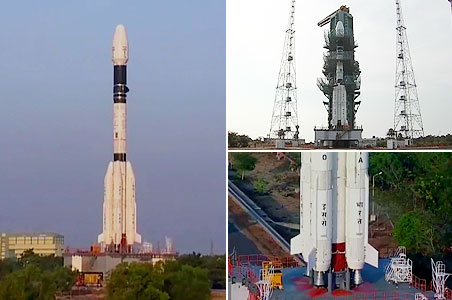
It took the country more than 15 years to develop the cryogenic engine as technology for this was denied when, in the 1990s, America put pressure on Russia and forced the cancellation of an Indo-Russian technology transfer deal. The argument given was that India would use these engines to make missiles. Two decades later, none of the Indian missiles uses a cryogenic engine. A team of hundreds of scientists toiled day and night to master this technology.
There will now be a thorough probe into why the cryogenic engine failed.
Minister of State Science and Technology Prithviraj Chauhan is also expected to make a statement on the GSLV failure. (Read: Disappointment. India's GSLV D3 mission fails)
On Thursday, immediately after a much-awaited launch of the Geosynchronous Satellite Launch Vehicle (GSLV), the indigenous cryogenic engine underperformed and rocket deviated from its path.
ISRO chairman, K Radhakrishan, announced that the rocket had spun out of control and that the cryogenic engine may have ignited. He promised another attempt next year. (Read: ISRO statement on GSLV's failure)
"Sorry to inform you that the cryogenic stage was not successful. The countdown was eventless. We are not very sure that the cryogenic main engine did ignite. The vehicle was tumbling, it lost its control and altitude and splashed down in the sea," Radhakrishan said.
The cost of the mission was Rs 330 crore. The tall and majestic GSLV, if launched successfully, would have marked India's entry into the multi-billion dollar commercial launcher market on a fully indigenous rocket. A sophisticated new Indian technology called the cryogenic engine was being flown for the first time. In the five earlier flights, India had used pre-used imported Russian made cryogenic engines. It was this engine that underperformed.
The failure will impact India's efforts at launching its own satellites, its first manned space flight and the planned launch of Chandrayan 2 in 2012.
It's the second major setback months after the failure of Chandrayaan-1 - India's maiden mission to the moon. But on a positive note, ISRO has been able to come back with a bang in the past. It plans to attempt another launch in a year.
Scientists also point out that cryogenic engines are a difficult technology to master and even countries like the US and Japan failed in their maiden attempts.
The Indian-made Geosynchronous Satellite Launch Vehicle, at 50 meters tall would be as high as a 25-storey building, and weighing a whopping 416 tons. It is a three-stage rocket.
At lift-off, the first stage ignites using one of the world's largest solid fuel motors and strap on boosters. (Read: GSLV - India's big launch)
The first stage separates and the second stage, powered by a liquid engine takes over, while the heat shield is shed.
At an altitude of about 130 kilometres, the second stage separates and the all-important cryogenic engine takes over. Using very cold liquid oxygen and liquid hydrogen as fuel, this special engine helps launch heavier satellites into space.
After a 17-minute flight, the satellite was to have been put into its designated orbit above Earth.
This mission was to have hoisted a sophisticated communications satellite called G-Sat, an Indian-made experimental satellite that weighs 2200 kg and would improve the global positioning system. It was also to have tested a new electrical propulsion system to keep the satellite in its orbit. It was also carrying a set of Ka band transponders, which would have increased the quality of television coverage.
Source: http://www.ndtv.com/news/world/gslv-failure-work-on-cryogenic-engine-to-continue-20108.php
15 April, 2010
Countdown for GSLV-D3 launch progressing smoothly
T.S. SUBRAMANIAN Rocket will soar from its launch pad in Sriharikota at 4.27 pm today The 29-hour countdown for the lift-off of the Geo-synchronous Satellite Launch Vehicle (GSLV-D3), which began at 11.27 a.m. on Wednesday, is progressing smoothly, according to S. Satish, spokesman, the Indian Space Research Organisation (ISRO). If there is no hold-up in the countdown, the rocket will soar from its launch pad at Sriharikota at 4.27 p.m. on Thursday. The vehicle, being powered by a totally indigenous cryogenic engine for the first time, will put an advanced communication satellite, GSAT-4, in orbit. “A successful flight will give India a coveted status among the space-faring nations in the world and total self-reliance in all areas of launch vehicle technology,” said Mr. Satish. The previous five GSLV flights from Sriharikota from 2001 to 2007 used the Russian cryogenic engines. The GSLV-D3 vehicle is 49 metres tall and weighs 419 tonnes. It is a three-stage rocket. The core first stage is powered by solid propellants. Around this core stage are four strap-on motors powered by liquid propellants. The second stage again uses liquid propellants. The third upper stage is propelled by the indigenously made cryogenic engine. Filling of the second stage and the four strap-on booster motors with liquid propellants will be completed during the countdown. “Besides, the filling of the cryogenic engine with liquid hydrogen and liquid oxygen will continue till almost the end of the countdown. This is to prevent loss of cryogenic fluids due to evaporation,” said Mr. Satish. Certain mandatory checks of the vehicle and charging of the batteries in both the rocket and the satellite would be done during the countdown. The GSAT-4 weighs 2,220 kg. It carries a communication payload called Ka-band transponder for wide-band multimedia services, e-commerce and high bandwidth Internet. The navigation payload named the GPS-aided Geo-Augmented Navigation (GAGAN) system will help commercial aircraft to land accurately in runways during inclement weather.

14 April, 2010
India is the best suited for PaaS, says Microsoft
By Manu Sharma, Apr 14, 2010 1759 hrs IST
In a bid to consolidate itself in the cloud space, Microsoft India has launched Windows Azure platform for end-to-end offering to customers, partners and developers. With Azure available as PaaS (Platform as a Service), Microsoft plans to increase the number of applications by three times over the next six months in India.
According to Microsoft, India is the best suited for PaaS offering than any other country in the world. Microsoft India has 4400 applications built on Windows Azure platform since February 2010.

Talking to CXOtoday at Microsoft Tech.ed 2010, Kattayil Rajinish Menon, MBS & Azure Evangelism Lead, Microsoft India said, "With businesses looking to the cloud to bring higher efficiencies, it is natural for us to leverage our strength of the past 15 years in the cloud space. Our PaaS offering has been very successful and has leapfrogged ahead of other countries."
As per industry experts, out of the total 46,000 application of Microsoft Azure, about 4400 applications are from India i.e. 12-13 percent of the company's share across the globe. The company reaches out to companies through its partners, ISV, SI and VAR across the country.
Menon said Wipro Technologies a partner started building applications on the Windows Azure platform to provide customers with dynamically scalable, high-performance applications on a pay-as-you-go basis. By taking advantage of the on-demand application scaling, Wipro expects to reduce costs, improve agility, enhance global consistency for its customers, and add new revenue streams for its own operations.
Similarly HCL Technologies to record the carbon credits of a company created a dash board management tool hosted on the cloud. Infosys set up a dealer management solution to track the stock available and maintain inventory again built on a Windows Azure platform.
Likewise, Wipro created a vendor portal hosted on Windows Azure platform to manage vendor details like procurement for their clients in the manufacturing and retail industry.
"We ran the beta PaaS for one year before officially launched it in India in February 2010 and have very little competition in this space since even Amazon offers IaaS and not PaaS," said Menon.
Microsoft has 8 centres where the data centres are located especially for the Azure customers and this includes even the disaster recovery sites as well. "We don't have no data centres for Azure customers in India but likely to add over the years," adds Menon.
Source: http://www.cxotoday.com/News/IT/ITeS/Networking_&_Communication/India_is_the_best_suited_for_PaaS_says_Microsoft/551-110554-20871.html
Image Source: http://www.mspmentor.net/wp-content/uploads/2010/02/microsoft-windows-azure-mspmentor.jpg
Infosys iRace to stay till 2014
14 Apr, 2010, 1733 hrs IST, Indiatimes Infotech
NEW DELHI: Infosys' employee rating system iRace (Infosys Role and Career Enhancement) is here to stay. The HR programme which seems to have not gone too well with the company's employees (and has also been blamed for recent staff exodus from the company) is not getting any iterations.
According to a news report in CIOL, the HR initiative would be around for five years, and changes and restructuring in the programme would take place in 2014. "iRace is a career architecture exercise. The program, which has been designed by the HR team, would continue to be the same. The company would look at any new program only after five years. The changes would depend on the market requirements at that point of time," said TV Mohandas Pai, Director and Head, Finacle, Admin, Human Resources, Infosys Leadership Institute and Education and Research in the news report.
The news story also quotes Nandita Gurjar, senior vice president and group head, Human Resources, Infosys Technologies, saying that Infosys started iRace as a career growth programme in October 2009. It is being rolled out in a phased manner and the entire rollout would end by October 2010.
iRace led to 4500 demotions in October 2009. Of the 4,500 employees demoted after the introduction of iRace, nearly 2,500 have been given promotion (effective Aroril 2010) while the remaining are reported to have been retained at the same level.
iRace is a career architecture mapping programme designed by Mercer Consulting for Infosys. It aims to grade employees across different levels according to their roles.
Source: http://infotech.indiatimes.com/news/software__services/Infosys_iRace_to_stay_till_2014/articleshow/5803067.cms
10 April, 2010
Intel India launches classmate PC design
Bangalore, Apr 9, DHNS:
Intel, on Friday, unveiled Intel-powered convertible classmate PC design, focusing on the educational market and also announced other offerings, which it believes, will help in transforming the education system.
T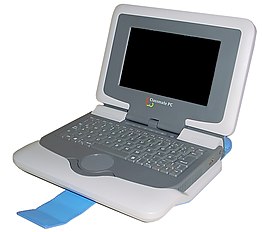
Briefing reporters, Intel world ahead programme Director Sales and marketing Group and General Manager John Davies said, “Education is the best way to improve and change the living style of people in various parts of the country.”
Further he said, “the reference model is built on Intel architecure powered by Intel Atom Processor will help in changing the learning and teaching experience.”
Vendors partnership
Intel also said more than 300 vendors including hardware, software and enterprise solution providers are developing applications, peripherals and services for the classmate PC. It also said Wipro is the original equipment manufactruer (OEM) partner for the new design in India. The new model is priced at Rs 22,000 and the pricing may vary based on the configuartion, it said.
Source: http://www.deccanherald.com/content/62962/intel-india-launches-classmate-pc.html
Image Source: http://upload.wikimedia.org/wikipedia/commons/thumb/6/6f/Intel_Classmate_PC.jpg/262px-Intel_Classmate_PC.jpg
08 April, 2010
Immunet new free antivirus on the cloud

Not long ago,Panda Cloud has emerged , a free antivirus that emphasized over other security solutions on one thing: it worked in the cloud . When we talk about the cloud, we always refer to the network, i.e the load of resources (much criticized in the current anti-virus) the owners of the servers support each service. After a time, Panda Cloud has become one of the free antivirus most used, since the basis of these security solutions lies in the speed with which they detect new viruses and malwares from day to day, working on a collective intelligence, so if a user got attack by a new virus, antivirus Cloud automatically sends the protection to other users connected to the Collective Intelligence Network .
Now comes another free antivirus Cloud called Immunet . This is a security solution very similar to Panda Cloud and would require a thorough analysis of the functions and protective power of each, but in general, promises to deliver more or less the same as the first.
Immunet is also based in Collective Intelligence, which leads to a positive (virus update instantly) and a negative (depends proportionally on the number of users who have).
One of the things that make Immunet very interesting, like the rest of antivirus in the cloud, they can live perfectly with other antivirus software because they are loaded beyond the PC. Something that is impossible to do when you have 2 antivirus installed, because usually the incompatibilities arise.
Source: http://ub-news.com/news/immunet-new-free-antivirus-on-the-cloud-online/11043.html
Image Source: http://www.geckoandfly.com/wp-content/uploads/2010/01/immunet_cloud_antivirus_free_download.jpg
Videcon launched its mobile services in Mumbai
08 April 2010
Mihir Patil
Videocon today launched their much awaited service in Mumbaias a part of "100 cities in 100 days" campaign.Videocon,which is banking on their tag line "Dhamake ka signal" is actually using the infrastructure of the oldest private telecom player in Mumbai LOOP Mobile until their network is ready.
Following are the details:
Sim cost- 49/-
Validity- Lifetime
Talk Value- 5
There are 3 First Recharge Coupons(FRC's) available right now.
FRC 31 offers all Local & STD calls at 1 paise/sec with a validity of 365 days
FRC 61 offers all Local & STD calls at 1 paise/sec with a talktime of Rs.61 and validity of 365 days.
FRC 101 offers all Local & STD calls at 1 paise/sec with a talktime of Rs.120 and validity of 365 days.
There exists a single Standard Tariff Voucher(STV) right now.
STV 28 offers all Local & STD calls at 1 paise/sec with a talktime of Rs.25 and validity of 365 days.
Local and National sms's are charged at Rs.1 and Rs.1.5 respectively.
There's nothing great in this offer.Videocon should have focussed more on giving path breaking offers to lure customers instead of just focussing on the network.This offer wont fetch more customers as the sms charges are high and nowadays every provider is providing all local and std calls at 1 paise/sec.
Source: http://mobigyaan.com/videcon-launched-their-mobile-services-in-mumbai

07 April, 2010
China Hackers Launch Cyber Attack On India, Dalai Lama
By Stefanie Hoffman, ChannelWeb
5:48 PM EDT Tue. Apr. 06, 2010
A cyberespionage group based in China hacked into India's computer systems to steal sensitive documents from the India Defense Ministry and e-mails from the Dalai Lama's office highlighted in a Canadian report Tuesday, Reuters reports.
The report, authored by Canadian and American researchers out of the University of Toronto, found that the attack was linked to an underground cyberespionage organization in the south of China, which might have funneled information to certain channels in the Chinese government.
The stolen documents that were recovered contained sensitive information from India's National Security Council Secretariat, as well as classified documents detailing the security situation in bordering nations Tibet, Bangladesh and Myanmar.
The report, titled "Shadows in the Clouds," indicated that Chinese cyberattackers capitalized on social networks such as Twitter, Google groups and Yahoo (NSDQ: YHOO) Mail to propel a botnet designed to infiltrate and infect Indian computers with malware and connect them into Chinese command and control centers.
Among the compromised systems subject to a massive data breach is the Shakti, the Indian Army's artillery combat and control system, as well as India's mobile missile defense system known as Iron Dome, according to Indianexpress.com.
The eight-month investigation -- which researchers said is ongoing -- found that the Dalai Lama's office was targeted in the attacks between January and November 2009.
A year ago, the same University of Toronto researchers authored another report describing a cyberattack on the Tibetan government, called "GhostNet," which was used to create a botnet that had infected 1,295 computers in 103 countries. Similarly, that investigation was launched at the behest of the Dalai Lama.
China denied involvement in the attacks, and the country's Foreign Ministry spokeswoman Jiang Yu told the BBC that the country was "firmly opposed to hacking." She added that the researchers had not contacted the Chinese government, although they claimed to have contacted China's Computer Emergency Response Team.
The cyberattack against Tibet was initiated just days after Google(NSDQ:GOOG) discontinued its Chinese language search services from mainland China.
High-profile cyberespionage has gained media attention in recent months after a sophisticated cyberattack was launched aimed at stealing intellectual property from the network of Google and more than 30 other corporations. Googel and security experts say that the attack originated from China.
Source: http://www.crn.com/security/224201581;jsessionid=MELC313DBGM3HQE1GHRSKHWATMY32JVN
06 April, 2010
Virus in Vodafone handset!

In a statement, Trend Micro said that Vodafone has been taking the heat for packing malware straight out of the box on their HTC Magic Android smartphones. Plugging the phone in via USB into any PC quickly led to an infection by WORM_SILLY.QT, the statement added. Trend Micro threat researcher, Ryan Flores, believes that most likely a computer in Vodafone's production line has been infected by WORM_SILLY.QT. And, because of the worm's capability to propagate through removable drives, somehow SD cards in a certain batch of smartphones were infected. The recipient of one of the malware-laden phones was, fortunately, an employee of the antivirus firm Panda Security. In an official statement, Vodafone has said that the infected phone problem was an isolated one.
Source: http://infotech.indiatimes.com/news/telecom/Virus-in-Vodafone-handset/articleshow/5763214.cms
Image Source: http://topnews.ae/images/vodafone-logo.jpg


 Posts
Posts